Bitwise AND, Computations, and Examples
3 min readIntroduction
A Bitwise AND is a binary operation that takes two equal-length binary representations and performs the logical AND operation on each pair of the corresponding bits. This is equivalent to multiplying them.
Bitwise ANDing any number x with 0 yields 0
Bitwise AND
The Bitwise AND operator does the following:
- It is a binary operator that takes two numbers.
- When we do Bitwise & of these two numbers, it considers the binary representation of these two numbers.
- Bitwise AND compares bit by bit in binary representation, and whatever binary representation you get, the corresponding integer is returned as an output.
The integer data type takes 4 bytes in C, C++, and Java programming languages.
4 bytes = 4 * (8 bits) = 32 bits. {1 byte = 8 bits}Example
Let’s see one of the above examples in binary representation.
For simplicity, let’s represent these in 16-bit instead of 32-bit binary.
a = 12
b = 10
---------------------------------
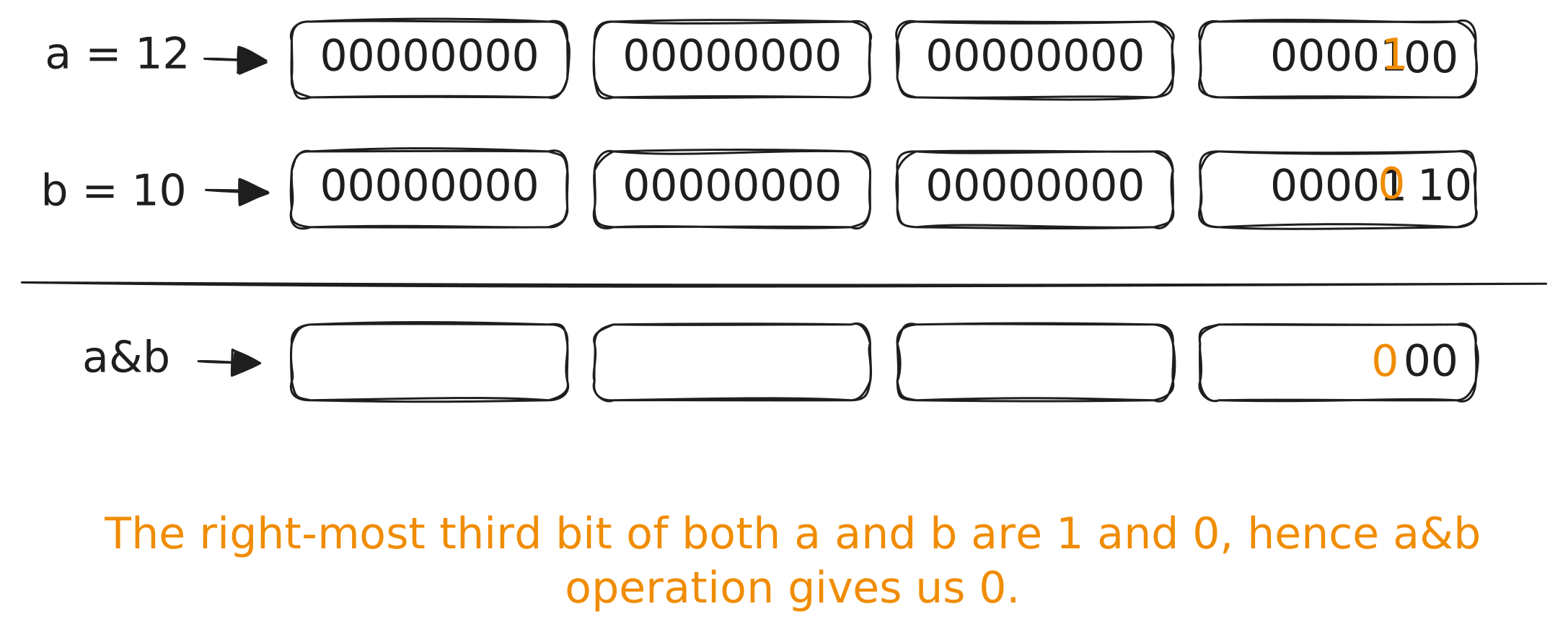
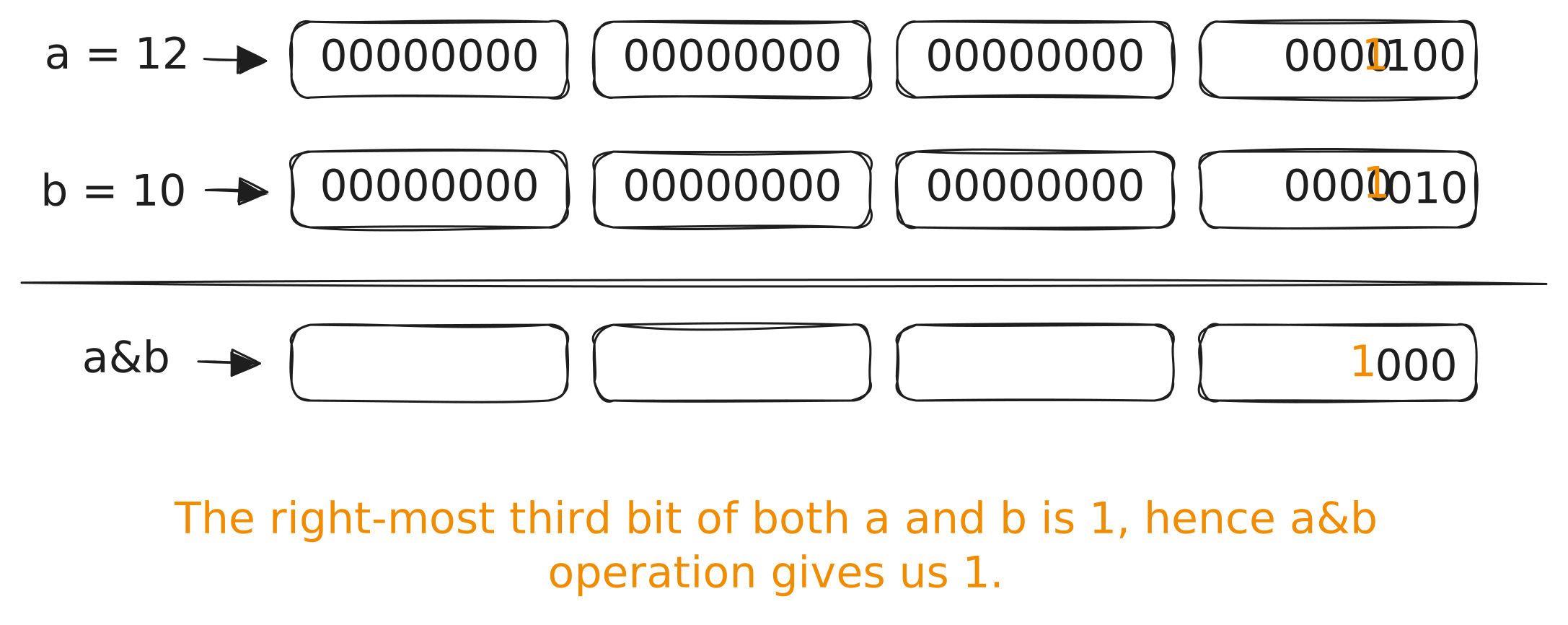
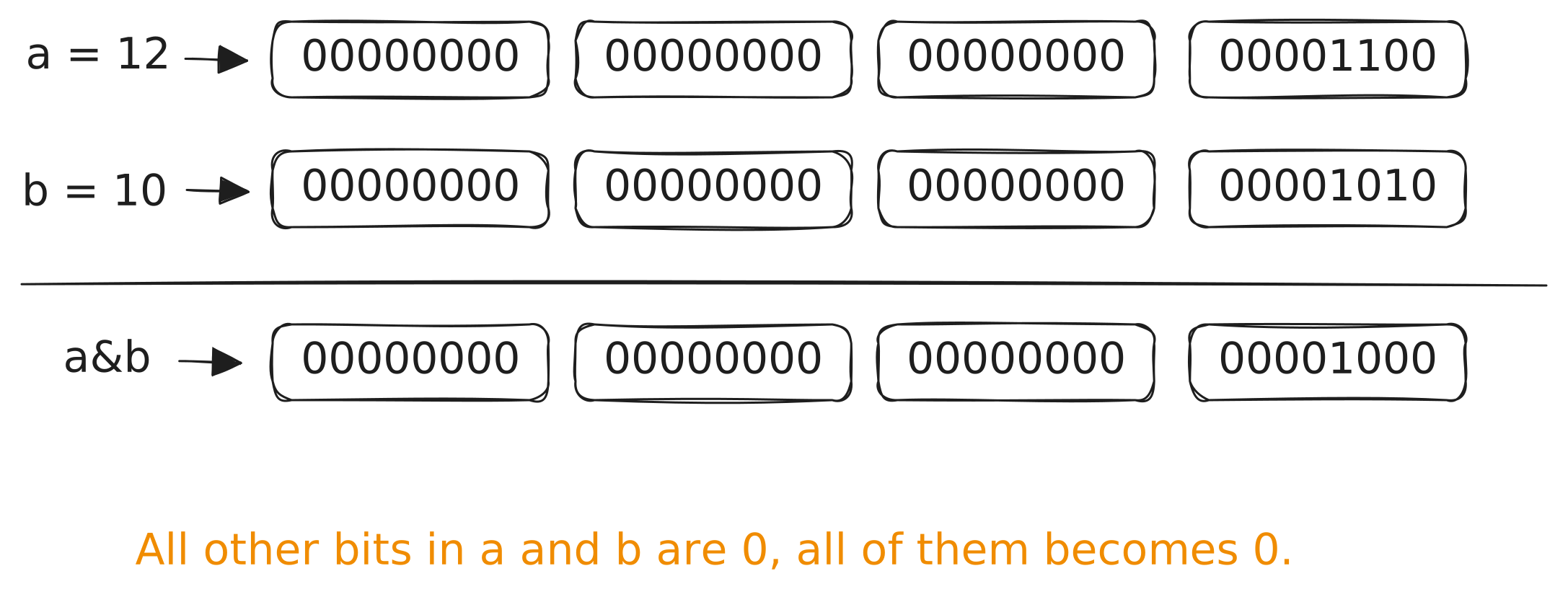
a in Binary : 0000 0000 0000 1100
b in Binary : 0000 0000 0000 1010
---------------------------------
a & b       : 0000 0000 0000 1000
---------------------------------
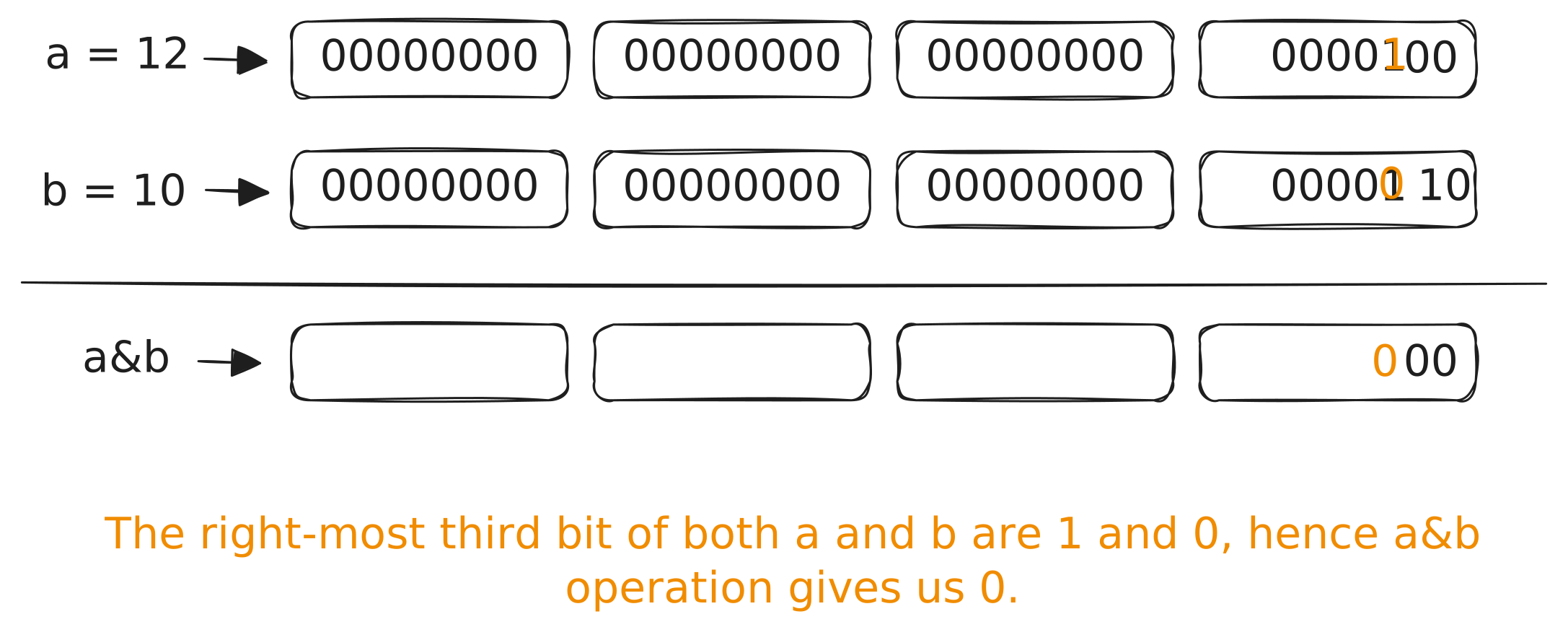
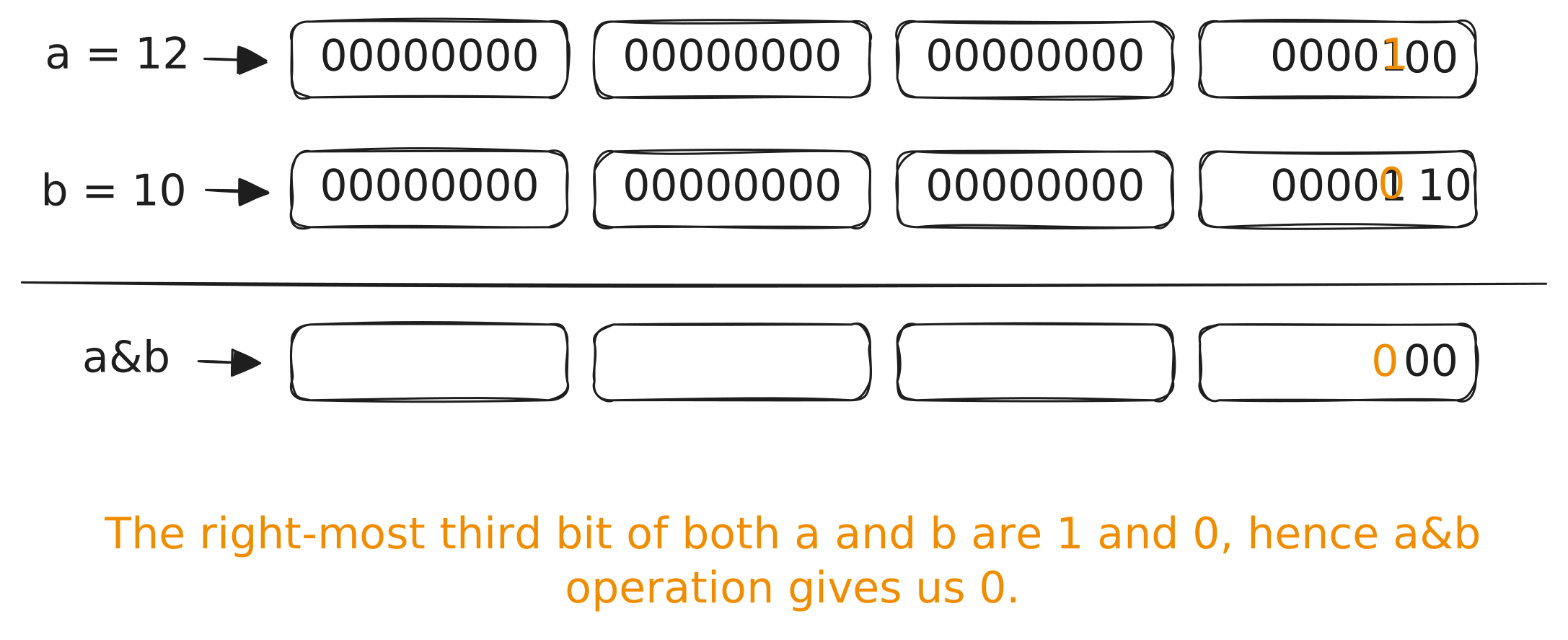
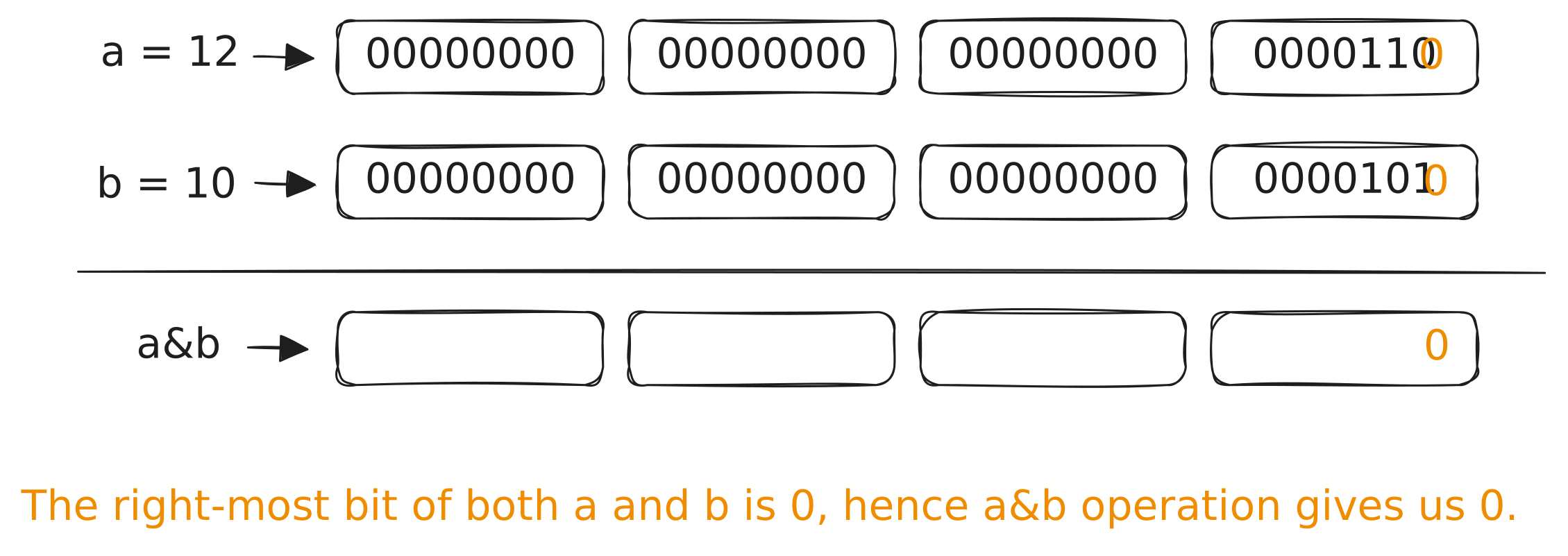
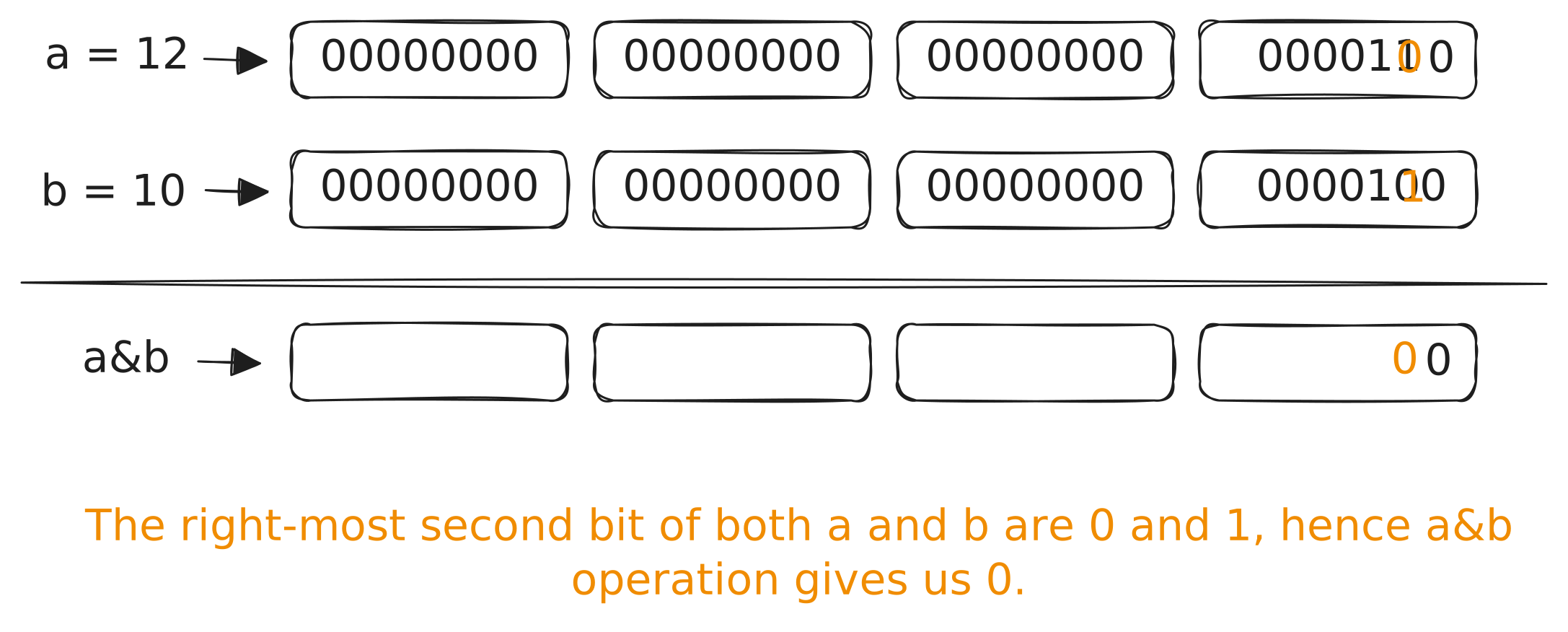
The & operation starts from the rightmost bit traversing towards the leftmost bit in the 32-bit binary representation.
Illustration
Let’s visualize the steps below.
Step#01:
Step#02:
Step#03:
Step#04:
Step#05:
Below is a code representation of the & operator.
Code
Java
class AndOperation {
    public static void main( String args[] ) {
        int x = 12;
        int y = 10;
        System.out.println("Bitwise AND of (" + x + " , " + y + ") is: " + (x & y)); // yields to 8
    }
}

// Outputs: Bitwise AND of (12 , 10) is: 8
Python
x = 12
y = 10
print("Bitwise AND of (x ,y) is : ", (x & y))

# Output: Bitwise AND of (x ,y) is: 8
JavaScript
const AndOperation = (x, y) => {
  return x & y;
}

const x = 12;
const y = 10;

console.log (`Bitwise AND of (${x}, ${y}) is: ${AndOperation (x, y)}`);

// Output: Bitwise AND of (12, 10) is: 8
C++
#include <iostream>
using namespace std;

int main() {
  int x = 12;
  int y = 10;
  cout << "Bitwise AND of (x ,y) is: " << (x & y); // yields to 8
  return 0;
}

// Output: Bitwise AND of (x ,y) is: 8
TypeScript
export const AndOperation = (x: number, y: number): number => {
    return x & y;
}

const x: number = 12;
const y: number = 10;

console.log(`Bitwise AND of (${x}, ${y}) is: ${AndOperation(x, y)}`);

// Output: Bitwise AND of (12, 10) is: 8
We will apply the Bitwise approach to solve a few problems in the following lessons.
Let’s jump into our first problem with the Bitwise & operator.