Introduction to XOR
1 min readThe Bitwise XOR operator is denoted by ^. When an XOR gate is given with 2 inputs, the corresponding outputs will be: If two input bits are different, the output is 1. In all other cases, it is 0.
This is an introductory lesson on XOR.
Introduction
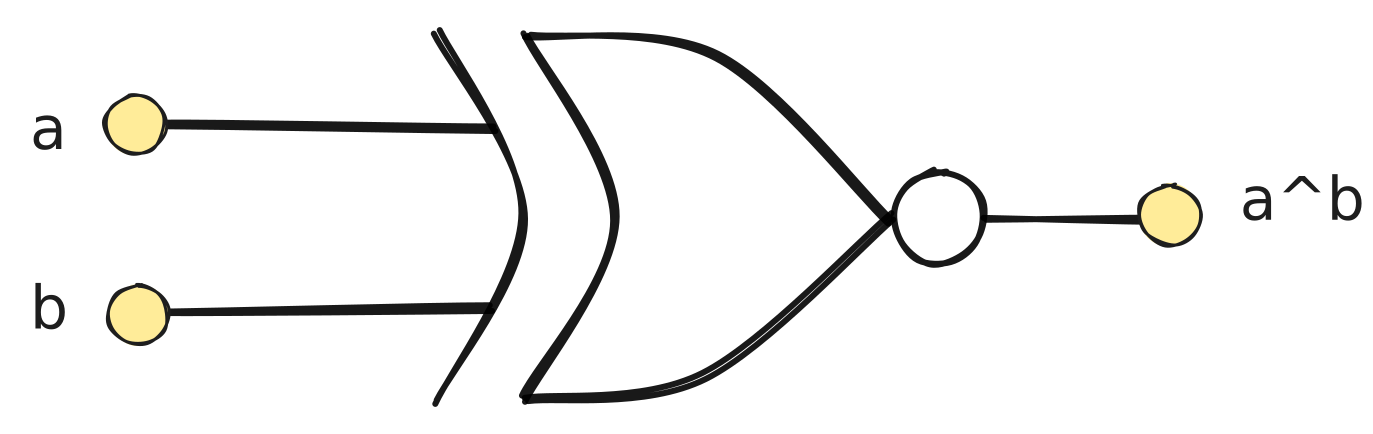
This operator is the same as the XOR gate that we studied in the digital electronics chapter, as shown below:
Sketch
What is the Bitwise XOR operator?
The Bitwise XOR operator is denoted by ^. When an XOR gate is given with 2 inputs, the corresponding outputs will be:
- If two input bits are different, the output is 1.
- In all other cases, it is 0.
Example:
1^1=> yields to00^0=> yields to01^0=> yields to10^1=> yields to1.
So Bitwise ^ returns a 1 in each bit position for which the corresponding bits of one of the operands are 1s.
Syntax
a^bXOR compares each bit of the first operand to the second operand’s corresponding bit. If both bits are 1 or both bits are 0, the corresponding result bit is set to 0. Otherwise, the corresponding result bit is set to 1.
Bitwise ^ table
| a | b | a ^ b |
|---|---|---|
| 0 | 0 | 0 |
| 0 | 1 | 1 |
| 1 | 0 | 1 |
| 1 | 1 | 0 |
Truth table
| a | b | a ^ b |
|---|---|---|
| False | False | False |
| False | True | True |
| True | False | True |
| True | True | False |
Let’s see some Bitwise ^ operator examples in the next lesson.